-
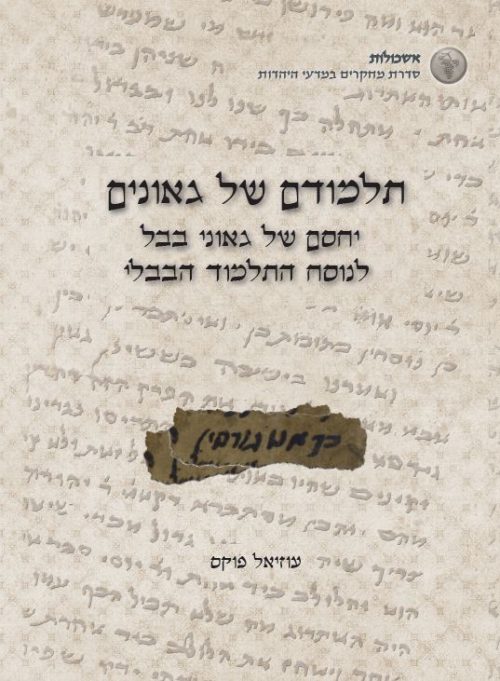
The Babylonian Talmud is the fundamental work of the Oral Law, both by virtue of the widespread and intensive study of it, and by virtue of reliance on it in halakhic writings, for over a thousand years. The Talmud gained much of its importance during the Geonic period. Throughout this time its transmission shifted from oral recitation to written copies, its text became standardized, and it was sent out from the Babylonian academies across the Jewish diaspora. Its intensive study and complex system of transmission both orally and in writing resulted in many variant readings between extant copies. This book deals with questions concerning the ways in which the Babylonian Talmud became such as seminal work, and especially the Geonate’s treatment of the its textual tradition: the ways in which the Geonim related to the variant readings, how they chose between them, and according to what criteria; to what extent were its early readings preserved and to what extent was its text altered. In the second half of the book the entire corpus in which the Geonim deal with Talmudic variants is presented and discussed.
-
This book presents Piyyutim (liturgical poetry) written by one of the most important poets in the Land of Israel, Rabbi Pinhas Hacohen birabi Yaacov, who lived in the area of Tiberias in the 8th century. The Piyyutim are taken from manuscripts of the Cairo Genizah, and are published for the first time. R' Pinhas seals the classic period of early Paytanim (authors of liturgical poetry) in the Land of Israel. His work preserves the variety of genres typical for classic Piyyutim, yet shows early signs of developments characteristic to late Eastern liturgical poetry. R. Pinhas' Piyyutim reveal a great poet with impressive compositional durability. In some of them he reaches unique climaxes, especially through dramatic developments in the Piyut.
-
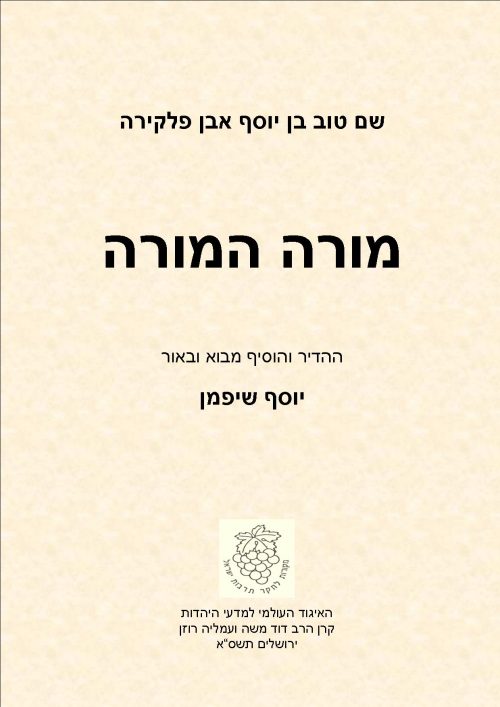
Out of stockMoreh Ha-moreh (The Guide’s Guide), by Shem-Tob ibn Falaquera, is one of the earliest commentaries on Maimonides’s Guide of the Perplexed. Falaquera’s knowledge of Arabic literature was broad, and he commented extensively on the well-known translation of the Guide by R. Samuel ibn Tibon. Given this knowledge, Falaquera was also acquainted with the philosophical sources behind Maimonides’ work, and referred to these in his own commentary. This critical edition of Falaquera’s work is based on all extant manuscripts known to us today; and it will be of value to all who wish to understand this important commentary and recover Maimonides’s sources. This edition presents the text of the Guide’s Guide, including varia lectionis and a commentary on Falaquera’s sources. These sources, which are largely also the sources of Maimonides, are discussed in great detail in the introduction to this edition.
-
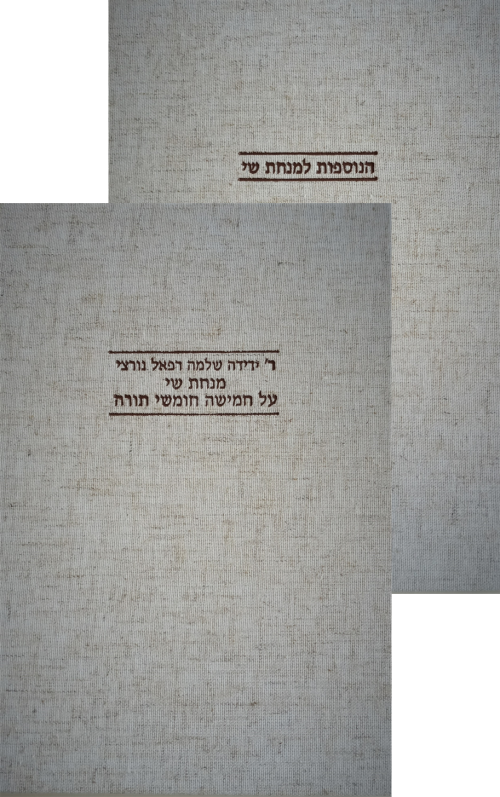
Minhat Shai, by the seventeenth-century scholar Yedidyah Shlomo Norzi, deals with the forms, vocalization, and Masoretic interpretation of biblical terms, in the order of their appearance in the Bible. The aim of this work is to analyze words with respect to their orthography, vocalization, and cantillation, and to assess their proper forms. The work was first printed in Mantua in the middle of the eighteenth century; it has since been reprinted in various places and always as part of editions of the Pentateuch or other sections of the Bible. The version in use today accords with the text as printed in Mikra’ot Gedolot (Vilna/Warsaw editions), where the relevant sections were appended following each biblical book. Even today, the work is considered an important guide as far as the biblical text is concerned; it reflects important decisions on questions of biblical orthography and interpretation. Scholars and students refer to it and respect its verdicts even though the version currently in use contains numerous errata. Many of the vocalization and cantillation marks noted by the author have been altered or omitted; thus, the author’s arguments are at times unclear, and at times even seem to contradict what may have been his original intention.
-
The Addenda to Minhat Shai complete the publication of Minhat Shaion the Torah by Yedidyah Shlomo Norzi.
-
Sale!Minhat Shai, by the seventeenth-century scholar Yedidyah Shlomo Norzi, deals with the forms, vocalization, and Masoretic interpretation of biblical terms, in the order of their appearance in the Bible. The aim of this work is to analyze words with respect to their orthography, vocalization, and cantillation, and to assess their proper forms. The work was first printed in Mantua in the middle of the eighteenth century; it has since been reprinted in various places and always as part of editions of the Pentateuch or other sections of the Bible. The version in use today accords with the text as printed in Mikra’ot Gedolot (Vilna/Warsaw editions), where the relevant sections were appended following each biblical book. The Addenda to Minhat Shai complete the publication of Minhat Shai on the Torah.
-
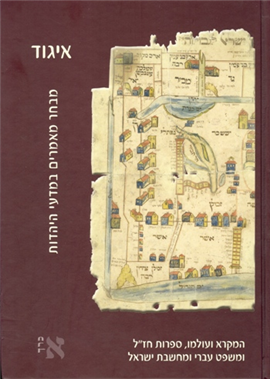
Iggud - Selected Essays in Jewish Studies, Vol. 1 The Bible and Its World, Rabbinic Literature and Jewish Thought Editors: Baruch J. Schwartz, Aharon Shemesh, and Abraham Melamed Full Table of Contents Iggud: Selected Essays in Jewish Studies: Articles published in the Iggud Volumes will be based on the best lectures which were given in the World Congress for Jewish Studies held in Jerusalem once every 4 years, and these volumes will therefore replace the Proceedings of the World Congress of Jewish Studies which have been published thus far. In the first volumes of Iggud (1-3) were gathered articles based on lectures given on the 14th Congress held in August 2005. " In the Bible and Its World Section eleven articles are published in Hebrew and five in English. This large number reflects truthfully the strenuous development in researching Bible commentators and their methods, a subject which is again central in Biblical Science of this era. Beside articles in this field, appears a selection of articles about Bible Study itself with its various spheres, such as Biblical criticism and prophetic books, archeology and realism, and the various ways that Biblical Literature takes. The Rabbinic Literature and Jewish Law section includes nine Articles in Hebrew and two in English. These studies span several branches of Talmud and Halakha, and show especially the expanding interest, these days, in the questions touching on the process of editing and forming of Rabbinic Literature. Further to these studies dealing with these aspects of the profession, appear discussions in issues of Halakha, Law and Talmudic tale history. Eight articles in Hebrew and two in English are published in the Third section, which is dedicated to Jewish Thought. The studies are naturally divided into studies of contemplation and teachings of the philosophers themselves, through their writings together with the era they lived in and the elements influencing them on the one hand, and in these several studies comparing between the first and the last and studying the connection between them, and studying their methods of research on the other hand." (from the preface).
-
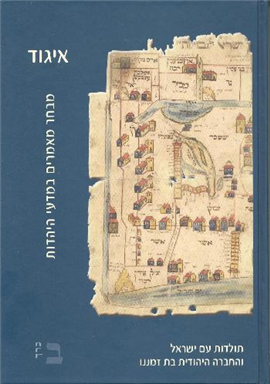
Iggud - Selected Essays in Jewish Studies, Vol. 2 History of the Jewish People and Contemporary Jewish Society Editors: Gershon C. Bacon, Albert Baumgarten, Jacob Barnai, Haim Waxman, and Israel Yuval Full Table of Contents Iggud: Selected Essays in Jewish Studies: Articles published in the Iggud Volumes will be based on the best lectures which were given in the World Congress for Jewish Studies held in Jerusalem once every 4 years, and these volumes will therefore replace the Proceedings of the World Congress of Jewish Studies which have been published thus far. In the first volumes of Iggud (1-3) were gathered articles based on lectures given on the 14th Congress held in August 2005.
-
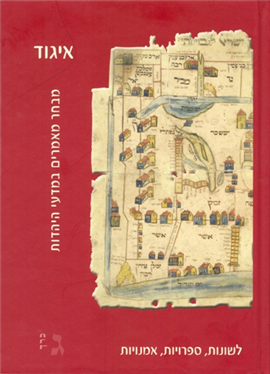
Iggud - Selected Essays in Jewish Studies, Vol. 3 Languages, Literatures, Arts Editors: Tamar Alexander-Frizer, Yosef Tobi, Dan Laor, Ora Schwartwald, and Ziva Amishai-Maisels Full Table of Contents Iggud: Selected Essays in Jewish Studies: Articles published in the Iggud Volumes will be based on the best lectures which were given in the World Congress for Jewish Studies held in Jerusalem once every 4 years, and these volumes will therefore replace the Proceedings of the World Congress of Jewish Studies which have been published thus far. In the first volumes of Iggud (1-3) were gathered articles based on lectures given on the 14th Congress held in August 2005.
-
Sale!Meir of Rothenburg (c. 1215 – 2 May 1293) was a German Rabbi and poet, a major author of the tosafot on Rashi's commentary on the Talmud. He is also known as Meir ben Baruch, the Maharam of Rothenburg. His responsa are of great importance to advanced students of the Talmud, as well as to students of Jewish life and customs of the 13th Century.
-
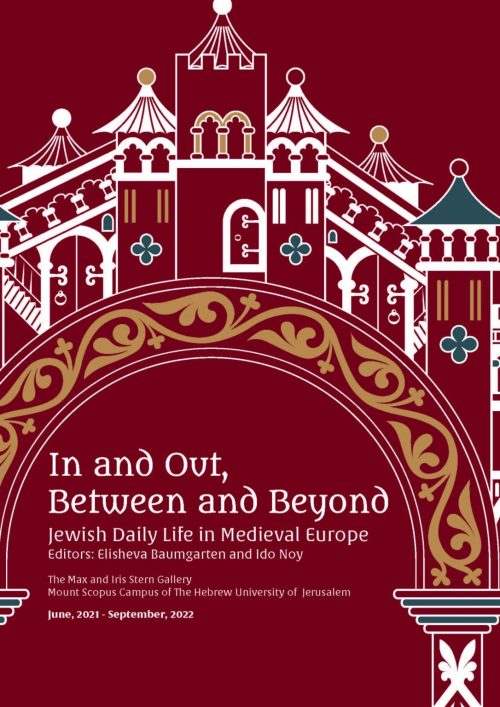
For more information on the project, see here. This book, produced for the exhibition In and Out, Between and Beyond, presents the scholarly work of a group of historians who study the Jews of medieval Ashkenaz at the Hebrew University of Jerusalem, in dialogue with the work of contemporary Israeli artists. This is one of the culminating projects of the European Research Council-funded research group Beyond the Elite: Jewish Daily Life in Medieval Europe. Since the inception of the project (fall 2016), the team has worked to construct a history which includes those who were not part of the learned elite as well as those who were learned, about whom we know more. The research team trained its sights on everyday moments, investigating daily routines and the ways medieval Jews understood their lives amidst their host cultures. At the heart of this work is the complexity of the circumstances in which medieval Jews lived: the integration of Ashkenazic Jews within their Christian surroundings, alongside their maintenance of a distinct religious identity. To complement the medieval study underlying this endeavor, the exhibit’s curator, Dr. Ido Noy, orchestrated a fruitful exchange between the research team and seven Israeli artists, who then produced contemporary expressions of the historic ideas under discussion. This book, mirroring the structure of the exhibit, is comprised of sixteen articles. Each one is built around a primary source from a particular literary genre. The colorful catalogue at the end of the volume documents the objects created especially for the exhibition that was displayed physically at the gallery on the Mount Scopus campus of The Hebrew University of Jerusalem and can still be viewed virtually.
-
Meir of Rothenburg (c. 1215 – 2 May 1293) was a German Rabbi and poet, a major author of the tosafot on Rashi’s commentary on the Talmud. He is also known as Meir ben Baruch, the Maharam of Rothenburg. His responsa are of great importance to advanced students of the Talmud, as well as to students of Jewish life and customs of the 13th Century.